Lifestyle Creep: Why Earning More Doesn't Make You Richer (and How to Stop It)
You get the raise you wanted. For a month or two, life feels roomier. Then, somehow, the money is gone again, absorbed into a slightly nicer version of the life you already had. You are not reckless; you just upgraded, quietly, a little at a time.
This article explains how that happens, why it is so hard to feel, and how to keep more of your next raise without turning into a miser. Along the way we lean on the primary research: the lottery-winner study behind the "hedonic treadmill," the economics of comparing yourself to your neighbours, and a savings program that quietly doubled how much people put aside.
Short answer: Lifestyle creep (also called lifestyle inflation) is the slow rise in your spending that tracks every increase in your income, so a bigger paycheck leaves you with the same amount left over at the end of the month. It happens because small upgrades feel reasonable, become permanent, and quietly ratchet up your fixed costs. You beat it by deciding in advance where a raise goes, protecting a few cheap pleasures, and auditing your recurring bills once a year.
What is lifestyle creep? A plain-English definition
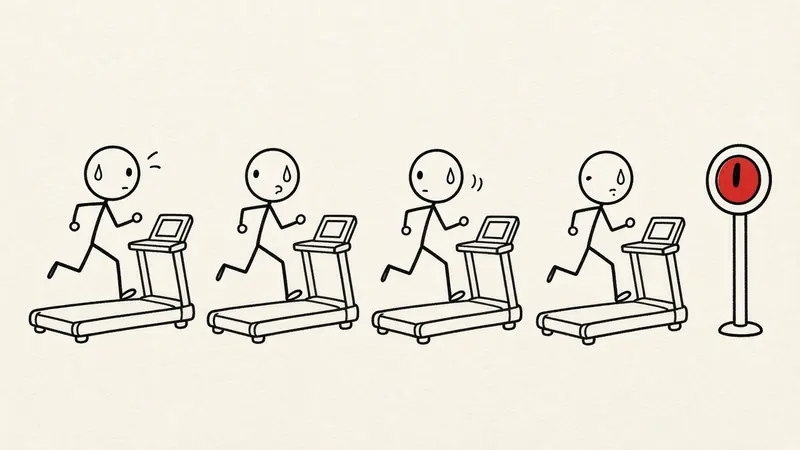
Lifestyle creep is what happens when your spending grows to match your income. Earn more, spend more, stay in roughly the same place. The treadmill speeds up and you jog faster, but the scenery never changes.
Here is the sneaky part: the word "creep" is doing real work. This is not one big splurge you could point to and regret. It is a long series of sensible-looking decisions: a slightly nicer flat, a car that is a bit newer, the faster delivery option, another subscription because everyone was talking about one show. Each is defensible on its own. Added together, they absorb the whole raise.
Lifestyle creep vs lifestyle inflation: are they the same?
Yes. "Lifestyle creep" and "lifestyle inflation" are two names for the same thing. "Inflation" borrows the economics word for prices rising; "creep" emphasises how slowly and quietly it happens. Some people use "inflation" for the broad trend and "creep" for the barely-noticed version, but there is no official distinction. Pick whichever word helps you notice the pattern in your own life.
Why lifestyle creep is so hard to feel
It is almost invisible while it is happening because three features hide it. The upgrades are small, the costs are recurring, and the voice justifying them never stops.
The upgrades are small and reasonable. Nobody wakes up and decides to double their spending. You decide, once, that you have earned a better coffee, or that the extra legroom is worth it this time. Small is the whole trick: a jump you would question, a drift you accept.
Fixed costs ratchet up and rarely come back down. This is the dangerous one. A pricier flat or a bigger car loan is not a one-time purchase; it is a higher baseline every single month, often locked in by a contract. Spending has a ratchet built in: it clicks up easily and resists clicking back down. A fancy dinner is a one-off. A bigger mortgage is forever.
The "I deserve this" voice is persuasive. After a raise or a hard stretch at work, a reward feels earned, and often it genuinely is. The problem is that this voice has no off switch. It justifies the upgrade, then the next one, then treats each new level as the normal floor you deserve to stay above.
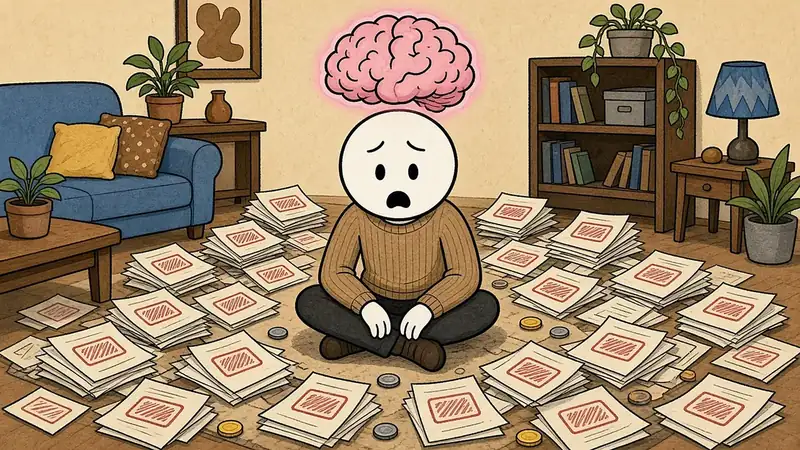
Meet Sam, our standing hypothetical. Sam got a 20 % raise (just an example number). Within a year, Sam's rent, car, phone plan, and subscriptions had all nudged up. Each decision made sense in the moment, yet the raise had vanished and Sam could not say where.
The three engines driving lifestyle creep
Lifestyle creep is not a character flaw. It is powered by three well-studied forces in human psychology. Name them and you can see them working on you.
Engine 1: The hedonic treadmill
Psychologists use the phrase "hedonic treadmill" (sometimes "hedonic adaptation") to describe how quickly we get used to good things. A pleasure that thrilled you last year becomes the unremarkable baseline this year, so you need something more to feel the same lift.
The famous illustration is a study by Brickman, Coates and Janoff-Bulman that compared 22 major lottery winners with 22 people from the same area and 29 accident victims left paralysed. The winners rated their present happiness at 4.00 on a 5-point scale, only a touch above the comparison group's 3.82, and the gap was not statistically significant. More tellingly, the winners took significantly less pleasure from a list of mundane everyday events (talking with a friend, eating breakfast, hearing a joke), scoring 3.33 against the comparison group's 3.82. Be honest about this one: the sample was small, so treat it as a striking early clue rather than hard proof. The broader body of adaptation research points the same way. We adjust.
The useful news is that adaptation can be slowed. Sheldon and Lyubomirsky tested what they call the hedonic adaptation prevention model and found two things help a good change keep feeling good: appreciation (actively noticing and savouring it) and variety (keeping the experience fresh rather than letting it harden into routine). As they put it, appreciation is the psychological opposite of adaptation. The practical lesson for spending: an upgrade you take for granted a week later was a bad buy; one you keep appreciating might be worth it.
Engine 2: Keeping up with the Joneses
Humans judge their situation by comparison, not in absolute terms. Your income feels good or bad largely relative to the people around you. The economist Thorstein Veblen captured the showy end of this over a century ago with his idea of "conspicuous consumption," spending designed to signal status.
There is harder evidence too. The economist Erzo Luttmer, in a study pointedly titled "Neighbors as Negatives," found that holding a person's own income constant, higher earnings among their neighbours were linked to lower reported happiness. His point estimates imply something striking: a rise in neighbours' earnings cut happiness by about as much as an equal-sized fall in the person's own income. Your neighbour's new kitchen can make your perfectly good kitchen feel shabby, though nothing about it changed. That is the engine: not what you have, but what you have compared to the people in view.
The opposite of this is quietly powerful, and it is the subject of the video below. The people who build real wealth often do the reverse of lifestyle creep: they let their income rise while keeping their visible spending flat, so almost no one around them can tell.
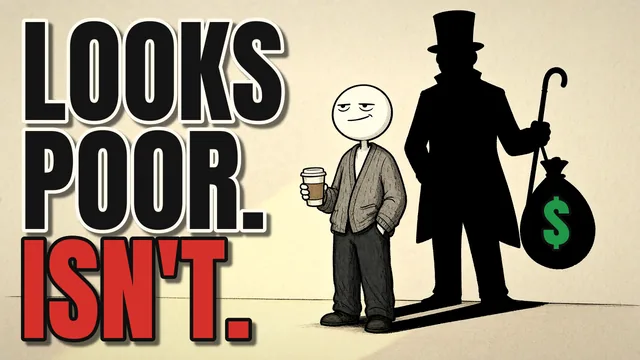
If high earners who still feel broke are a puzzle to you, that pattern has its own write-up in why smart people stay broke.
Engine 3: The Diderot effect
In an essay from 1769 titled "Regrets for my Old Dressing Gown," the French philosopher Denis Diderot described being given a beautiful new scarlet robe. Next to it, everything in his study suddenly looked shabby, so he replaced his straw chair with a leather one, then his desk, his prints, his shelves. One elegant gift dragged his whole room, and his budget, upward, and left him oddly unhappy about it. "All is now discordant," he wrote. "No more coordination, no more unity, no more beauty."
The anthropologist Grant McCracken later named this the "Diderot effect" in his book Culture and Consumption, defining it as the force that pushes a person to keep a consistent set of possessions. A new, nicer item makes the rest feel out of place, so one purchase triggers a cascade of matching upgrades. New phone, so now the old case looks cheap. New sofa, so the curtains have to go. One upgrade sets the standard, and the rest follow to meet it.
Lifestyle creep examples: the small upgrades that stick
Creep lives in specifics. Here are common ones, why each tends to stick, and the single question that pops the bubble.
| Category | The "small" upgrade | Why it sticks | Question to ask |
|---|---|---|---|
| Housing | A nicer flat "now that I can afford it" | Fixed monthly cost, locked by a lease, hard to undo | Would I rent this again today at this price? |
| Transport | A newer car on finance | Monthly payment plus higher insurance, both recurring | Is this solving a real problem or a status itch? |
| Subscriptions | One more streaming or app plan | Small, automatic, invisible on the statement | When did I last actually use this? |
| Food delivery | Defaulting to delivery over cooking | Convenience quietly becomes the habit | Am I buying time or avoiding a 20-minute task? |
| Upgrades to things you own | "Pro" version, bigger size, faster tier | Diderot effect: the rest now feels inadequate | Did the old one actually fail me? |
| Everyday treats | A premium version of a daily purchase | You adapt fast, so the lift disappears | Do I still notice this, or is it just baseline now? |
Notice how many of these are recurring, not one-off. That is where the money really goes. Recurring costs also drift upward on their own, through price rises and the quiet penalty loyal customers pay, a trap covered in the loyalty penalty.
The Raise Rule: decide before the money arrives
Here is the original framework for this article. By the time a raise hits your account, the "I deserve this" voice is already shopping. The fix is to decide before the money exists, when you are calm and nothing is tempting you yet.
The Raise Rule: commit, in advance, to how any future raise is split, so the choice is already made when the money lands.
A simple version: at least half of any raise goes automatically to savings or a specific goal, and the rest is yours to enjoy with zero guilt. The exact split is up to you. The point is that it is decided ahead of time and, ideally, automated so you never see the saved half as spendable.
This is not willpower folklore. It builds on a well-documented program by the economists Richard Thaler and Shlomo Benartzi called "Save More Tomorrow," which asked workers to commit in advance to directing a share of their future pay rises into their retirement savings. Because the extra saving came out of money people did not yet have, it sidestepped the pain of cutting current spending. In the first company to try it, the average saving rate among participants climbed from 3.5 % to 13.6 % over about 40 months, roughly four pay rises, and most people stayed enrolled. You are running the same play on yourself.
Three habits make the Raise Rule stick:
- Protect your cheap pleasures. The goal is not deprivation. Cheap, repeatable joys (a walk, a good coffee, a library book, a game night) deliver a lot of happiness per unit of money and you adapt to them slowly. Cut the expensive upgrades you stop noticing, not the cheap ones you savour.
- Allow one deliberate upgrade per raise. Pick a single thing that genuinely improves your days and lean into it on purpose. One chosen upgrade you appreciate beats five accidental ones you forget.
- Guard fixed costs hardest. Variable, one-off spending is easy to undo next month. Fixed commitments (rent, car finance, subscriptions) are the real danger because they renew automatically. Be generous with treats, stingy with new monthly obligations.
Good creep vs bad creep: not all spending is the treadmill
This is not an argument for hoarding every penny. More income should buy you a better life. The question is whether an upgrade delivers lasting benefit or just resets your baseline. The research points to a rough split between spending that tends to keep paying off and spending that fades fast.
| Good creep | Bad creep | |
|---|---|---|
| What it buys | Time, experiences, relationships, a few things you keep appreciating | A higher baseline on things you stop noticing |
| How it feels later | Still valued weeks and months on | Invisible within weeks, now just "normal" |
| Effect on fixed costs | Often one-off or flexible | Usually locks in a higher monthly bill |
| What research suggests | Experiences, buying time, and giving tend to lift happiness | Repeated material upgrades fade through adaptation |
| Your move | Choose it on purpose, savour it | Starve it, audit it, cut it |
Three findings back the "good creep" side. Treat them as tendencies, not guarantees:
- Experiences over possessions. Van Boven and Gilovich asked people which purchase had made them happier. Fully 57 % named an experiential purchase (a trip, a class, a concert) against 34 % who named a material one. Experiences resist comparison and improve in memory; objects just get old.
- Buying time. Whillans and colleagues, across samples totalling 6,271 adults in the United States, Canada, Denmark and the Netherlands, found that people who spent money to buy themselves free time reported higher life satisfaction. In a field experiment, the same people felt happier after spending about $40 on a time-saving purchase than after spending $40 on a material one.
- Spending on others. Dunn, Aknin and Norton gave people a small windfall and told some to spend it on themselves and others to spend it on someone else. Those who spent on others ended the day happier, and it made no difference whether the sum was $5 or $20. A later, larger replication found a weaker effect, so read this as suggestive rather than settled.
The rough test: "bad creep" quietly raises your baseline and you stop noticing it within weeks. "Good creep" buys you time, memories, relationships, or something you keep appreciating. Spend on the second kind on purpose; starve the first kind.
Common myths and mistakes about lifestyle creep
Myth: "I'll naturally save more once I earn more." For most people the opposite happens. Without a rule, spending expands to fill the new income. Saving more requires a decision, not just a bigger number on the payslip.
Myth: "Lifestyle creep only hits big spenders." It scales with income. High earners often feel just as stretched because their fixed costs rose in lockstep. A six-figure salary with six figures of commitments is not freedom.
Mistake: treating a raise as a permanent new floor. Bonuses and raises can shrink or vanish; a bigger mortgage does not. Upgrading your fixed costs to the top of your current income leaves no slack for a bad year.
Mistake: confusing frugality with misery. Cutting the cheap pleasures you enjoy while leaving the forgettable upgrades intact is exactly backwards. It feels like deprivation and saves little.
Big picture: lifestyle creep at the scale of a society. In an essay from 1930, the economist John Maynard Keynes imagined that rising productivity might eventually allow "three-hour shifts or a fifteen-hour week." Productivity did rise enormously, yet a full-time week is still far longer than that. One common explanation is that our wants grew along with our means, which is lifestyle creep at the scale of a whole society. For how that bargain shook out, see why we still work 40 hours a week.
How to stop lifestyle creep: a step-by-step plan
- Write your Raise Rule now. Before your next raise, decide the split (for example, at least half to savings or a goal, the rest guilt-free) and put it in writing.
- Automate the saved half. Set it to move the day you are paid, before the money reaches your spending account. What you do not see, you do not adapt to.
- Separate fixed from variable. List spending in two columns, recurring commitments and one-off choices. Be relaxed about the second and strict about the first.
- Pick one deliberate upgrade. Choose a single improvement you will genuinely appreciate, and enjoy it fully. Let that satisfy the "I deserve this" voice.
- Protect three cheap pleasures. Name three small, repeatable joys and vow not to cut them. They are your happiness budget and they cost almost nothing.
- Run a yearly creep audit. Once a year, list every recurring cost and ask the same brutal question of each.
The yearly creep audit
The audit is one question applied to everything you pay for on repeat:
Would I sign up for this again today, at this price, if I were not already subscribed?
Anything that gets a "no" or a hesitant "maybe" is a candidate to cut, downgrade, or renegotiate. Doing this on a set date each year turns a vague intention into a habit. Pairing the audit with a single annual "switching day," where you actually renegotiate or move your contracts, is where the real money comes back.
Key terms
- Lifestyle creep (lifestyle inflation): The gradual rise in spending that tracks rising income, so a bigger paycheck leaves roughly the same amount left over.
- Hedonic treadmill: The tendency to adapt to improvements so they stop feeling special, pushing you to chase the next upgrade for the same lift.
- Hedonic adaptation: The psychological process of getting used to a positive change until it feels normal.
- Hedonic adaptation prevention: Sheldon and Lyubomirsky's model holding that continued appreciation and variety slow how fast a good change fades.
- Fixed costs: Recurring commitments such as rent, loan payments, and subscriptions that renew automatically and resist being cut.
- Diderot effect: The way a single new purchase triggers a cascade of matching upgrades so your possessions stay a consistent set.
- Conspicuous consumption: Veblen's term for spending meant mainly to signal status to others.
- The Raise Rule: Our framework of deciding in advance how any future raise is split between saving and spending, before the money arrives.
Frequently asked questions
What is lifestyle creep in simple terms?
It is the tendency for your spending to rise as your income rises, so you end up with the same amount left over no matter how much you earn. Small upgrades become your new normal, and the extra money disappears into a slightly fancier version of the same life.
Is lifestyle creep always bad?
No. Using more income to genuinely improve your life is the whole point of earning more. Lifestyle creep becomes a problem when the upgrades raise your fixed costs permanently and you stop noticing them within weeks, so you pay more without feeling better. The goal is deliberate upgrades, not accidental ones.
What is the difference between lifestyle creep and lifestyle inflation?
There is no real difference; they are two names for the same thing. "Inflation" borrows the word for rising prices, and "creep" stresses how slow and quiet the process is. Use whichever term helps you spot the pattern.
How do I avoid lifestyle creep after a raise?
Decide where the raise goes before it arrives, then automate it. A common approach is to send at least half of any raise straight to savings or a specific goal and keep the rest for guilt-free spending. Because you commit in advance and never see the saved portion as available, you avoid the trap of your spending quietly expanding to swallow the whole increase.
What is the hedonic treadmill, and how does it relate to money?
The hedonic treadmill is the tendency to adapt to good things so they stop feeling special, which pushes you to seek the next upgrade to get the same lift. With money, it means each spending improvement becomes your unremarkable baseline, so you chase more and never feel richer. Slowing it down by savouring what you already have, and adding variety, is more effective than spending more.
Does spending money ever reliably buy happiness?
Some kinds hold up better than buying more stuff. Research suggests experiences, buying yourself free time, and spending on other people tend to lift happiness more than repeated material upgrades, which fade through adaptation. Spending on those on purpose is closer to good creep than bad creep.
How often should I review my spending for creep?
A full review once a year is enough for most people, built around the question "would I sign up for this again today at this price?" for every recurring cost. Picking a fixed annual date turns it into a habit rather than something you keep meaning to do.
Sources & methodology
How we researched this: we read the primary sources listed below (peer-reviewed papers via their DOIs, an NBER working paper, and the original Diderot and Keynes essays) and quote each number exactly as the source reports it, for the sample and setting that source studied. Where a famous finding rests on a small sample (the lottery-winner study) or has a mixed replication record (prosocial spending), we say so in the text. We do not run our own surveys, and the "Raise Rule" is our own framework, not a claim from the literature. The academic publishers below block automated requests, so some links may prompt for access; each DOI resolves to the cited article. Spot a mistake? Email us and we will fix it.
- Brickman, Coates & Janoff-Bulman, Lottery Winners and Accident Victims: Is Happiness Relative?, Journal of Personality and Social Psychology. DOI
- Sheldon & Lyubomirsky, The Challenge of Staying Happier: Testing the Hedonic Adaptation Prevention Model, Personality and Social Psychology Bulletin. DOI
- Luttmer, Neighbors as Negatives: Relative Earnings and Well-Being, Quarterly Journal of Economics. DOI (open-access working paper: NBER w10667)
- Thaler & Benartzi, Save More Tomorrow: Using Behavioral Economics to Increase Employee Saving, Journal of Political Economy. DOI
- Van Boven & Gilovich, To Do or to Have? That Is the Question, Journal of Personality and Social Psychology. DOI
- Whillans, Dunn, Smeets, Bekkers & Norton, Buying Time Promotes Happiness, Proceedings of the National Academy of Sciences. DOI
- Dunn, Aknin & Norton, Spending Money on Others Promotes Happiness, Science. DOI
- McCracken, Culture and Consumption: New Approaches to the Symbolic Character of Consumer Goods and Activities, Indiana University Press. iupress.org
- Diderot, Regrets for my Old Dressing Gown, translated for the Marxists Internet Archive. marxists.org
- Keynes, Economic Possibilities for our Grandchildren. panarchy.org
Education only, not financial, investment, tax or legal advice. Found an error? Email coinandcortex@gmail.com and we'll fix it.
Keep reading
-
Start here
Personalized Pricing: Why You and Someone Else Pay Different Prices for the Same Thing
Personalized pricing means two shoppers can pay different prices for the same item. See how it works, what the evidence shows, and six ways to pay less.
-
Start here
Why Do We Work 40 Hours a Week? The Surprising History (and What It Means for Your Money)
Why do we work 40 hours a week? The real history of the 40-hour week, why Keynes's 15-hour prediction flopped, and how to price your time in life-hours.
-
Start here
Why Smart People Stay Broke: The Psychology of Financial Intelligence
Why are smart people bad with money? A high IQ grows your income, not your savings. Here is the psychology, plus five simple systems that keep more of it.