The Loyalty Penalty: Why Loyal Customers Pay More (and How to Stop It)
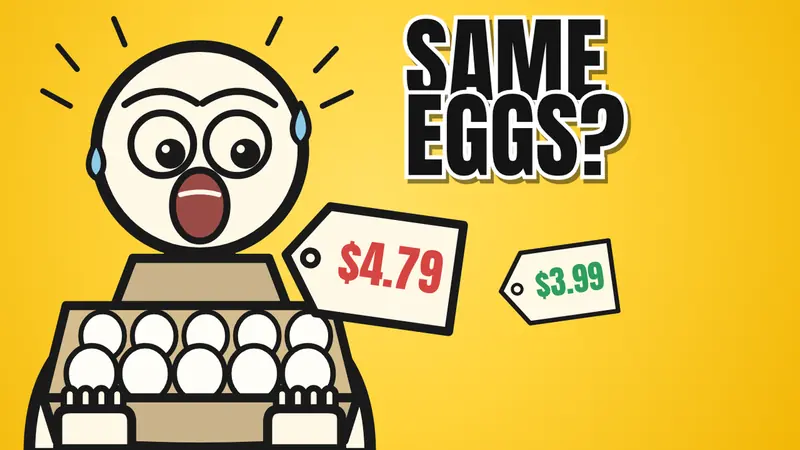
You've been with the same insurer, broadband provider, or bank for years. You pay on time, you never complain, you assume that counts for something. Then a friend signs up to the exact same company this week and pays noticeably less than you. That's not a glitch. In a lot of markets, it's the business model.
The uncomfortable truth is that in many everyday contracts, loyalty is not rewarded. It's quietly priced against you. The good news is that the trap is predictable, well documented by regulators, and beatable with about an hour of focused effort a year.
Short answer: The loyalty penalty is the extra money you pay simply for staying with a company instead of switching or haggling. Firms often lure new customers with cheap introductory prices, then quietly nudge up what existing customers pay at each renewal, betting that most loyal people won't check or move. You beat it by treating your contracts like something that expires, getting a fresh new-customer quote once a year, and either switching or asking your provider to match it.
What is the loyalty penalty?
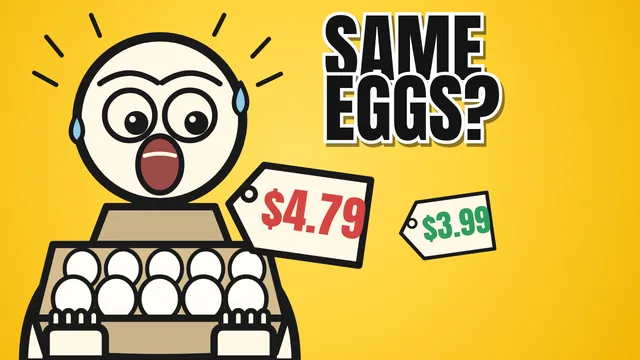
The loyalty penalty is the gap between what a new customer pays for a product and what a long-standing customer pays for the same thing. Same cover, same broadband speed, same account, higher price. The only difference is how long you've been there.
It works because companies know something uncomfortable about us: most people don't switch. Setting up a new account feels like admin, and the risk of getting it wrong feels bigger than the few units of currency you might save. So firms split customers into two groups. New ones get a sharp "teaser" price to win the sale. Existing ones get a price that creeps up a little at each renewal, year after year.
That creeping-up process has a nickname: price walking. Your price gets "walked" upward step by step, each increase small enough that you don't bother to react, until you're paying far more than the person who joined yesterday. The UK's Financial Conduct Authority described exactly this mechanism in its insurance pricing study: firms discount the first year to win you, then, in its words, "after they make back the initial discount, many firms continue to increase customer margins on renewal."
It's a close cousin of personalized pricing, where companies try to charge each customer roughly what they think that customer will tolerate. The loyalty penalty is the blunt version: instead of modelling you personally, firms model a simple fact, which is that loyal customers rarely leave, so loyal customers can be charged more.
Here's the part that stings. The loyalty penalty isn't funded by thin air. The cheap deals offered to new customers are partly paid for by the higher prices charged to the people who stay. In plain terms, your loyalty is subsidising someone else's welcome discount.
Where does the loyalty penalty hide?
The penalty rarely announces itself. It shows up as a renewal that's "about the same as last time" or a rate that silently drifts. These are the usual hiding spots.
| Contract type | Where the penalty hides | What to check | What to ask |
|---|---|---|---|
| Home and car insurance | The auto-renewal quote that arrives before the deadline | Last year's premium vs. this year's, and the new-customer price online | "Can you match the new-customer price, or should I switch?" |
| Broadband and mobile | Price after the intro deal ends; still paying "handset" cost after the phone is paid off | Your current monthly price vs. the advertised deal for new joiners | "My contract's out of term. What's your best retention offer?" |
| Savings accounts | Headline rate that quietly drops after the first year | The rate you're actually earning now vs. the bank's current best easy-access rate | "Why is my rate lower than your new accounts, and can you move me?" |
| Mortgages | The lender's standard variable rate after a fixed deal ends | Whether you've rolled onto the default rate instead of a new fixed deal | "What are my remortgage options before I roll onto the standard rate?" |
| Subscriptions and software | Auto-renewal at full price after a discounted first term | The renewal charge vs. the current new-customer or annual price | "Is there a loyalty or annual-plan discount if I stay?" |
Notice the common thread: auto-renewal. The default is set up so that doing nothing costs you money. If a contract renews itself unless you act, that's exactly where you should look first.
Why do loyal customers pay more than new ones?
Because firms bet that existing customers won't switch, and the data says that bet usually pays off. This isn't a conspiracy theory, and it isn't rare. Regulators have measured it in detail across essential markets.
In the UK, the consumer charity Citizens Advice filed a formal "super-complaint" arguing that loyal customers were being systematically penalised. It estimated the cost at £4.1 billion a year and put the average loyalty penalty at £877 per person a year, equal to about 3% of a household's total annual spending. It found that eight in ten people were paying a significantly higher price in at least one market for staying with their existing supplier, and that the penalty fell disproportionately on vulnerable consumers, including older people and people with mental health conditions, who tend to find switching hardest. (These are UK figures, used here to show the scale of the pattern, not a price in your market.)
The country's competition regulator, the Competition and Markets Authority, investigated and agreed the problem was real and widespread. Its response, Tackling the loyalty penalty, estimated the penalty at around £4 billion a year across five markets in particular: mobile, broadband, cash savings, home insurance, and mortgages. It found the number of affected customers ranged "from under 1 million in mortgages to over 12 million in home insurance." It also warned the problem is likely much wider, naming pay TV, roadside assistance, many other insurance markets, pensions, and subscription services such as online gaming, software and magazines.
How big is the penalty in insurance?
Big enough that the regulator put hard numbers on it. The FCA's general insurance pricing study is the clearest window into price walking anywhere, because the regulator pulled actual pricing data from firms.
For a typical risk, the FCA found that a motor insurance customer who had been with their provider for more than five years paid on average £85 more than a new customer with the same risk, against a typical new business motor policy of £285. For combined buildings and contents home insurance, the gap was £122 on top of a new business price of £165. Buildings-only cover carried an £108 gap over £130, and contents-only an £82 gap over £56. The FCA found these increases affected around 10 million policies for people who had stayed with their provider for five years or more.
The study also showed who ends up paying. The main factor linked to long tenure was age: in motor insurance, customers under 45 had an average tenure of less than two years, while those 65 and over averaged more than four. Put simply, the people least likely to shop around tend to be the ones who've been loyal longest, and they carry the heaviest penalty.
What did regulators actually do about it?
In home and motor insurance, the FCA banned price walking outright. The rule is blunt and useful: the renewal price offered to an existing customer can't be higher than the price that customer would pay as a new one for the same product. The FCA estimated the package of measures would save consumers £4.2 billion over ten years, and noted that six million loyal policyholders would have saved £1.2 billion in a single year had they simply paid the average price for their risk.
Two things to take from this. First, if official regulators had to step in, you can stop blaming yourself for feeling ripped off, because you were onto something real. Second, rules like the insurance ban exist in some places and cover some products, not others. Most of your contracts are still wide open to the penalty. The defence has to be you.
Why don't we just switch?
If the fix is so obvious, why does almost everyone leave money on the table? Because the companies aren't really exploiting your finances. They're exploiting your psychology.
The big one is status quo bias: our strong tendency to stick with whatever we've already got, even when a better option is sitting right there. In a well-known series of experiments, economists William Samuelson and Richard Zeckhauser showed that people "disproportionately stick with the status quo," choosing to keep things as they are simply because that's the current state. Doing nothing feels safe. Changing feels like a decision you could get blamed for.
Three smaller forces pile on top:
- The hassle factor. We overweight the time and faff of switching and underweight the money saved. A 30-minute phone call to save a chunk of your bill feels worse than it is.
- Loyalty as a virtue. We're raised to think loyalty is good and switching is a bit disloyal. Companies are delighted by this. They don't feel loyal back; they feel your renewal date approaching.
- Fear of losing what you've got. Your current setup works. Switching raises the ghost of a coverage gap, a broadband outage, a form filled in wrong. Loss looms larger than gain, so we freeze.
Take a hypothetical reader, Sam. Sam is sharp with money in most ways, but has been on the same phone plan for six years. Sam knows it's probably too expensive. Sam also knows that checking means admitting it's been overpaying for years, and nobody enjoys that feeling. So the renewal sails through again. The penalty isn't that Sam is careless. It's that the system is designed to reward the exact instinct most of us have.
Switch, haggle, or stay: how to decide
Once you've found the gap, you have three moves. Most people freeze because they treat it as one big scary decision. It isn't. Run each contract through this simple matrix and the choice usually makes itself.
| Your situation | Best first move | Why | Watch out for |
|---|---|---|---|
| New-customer price is far below your renewal, and switching is easy | Switch | The market has already told you the real price; loyalty is costing you most here | Line up the new service before cancelling the old |
| You'd rather stay, and your provider can match a real quote you found | Haggle (match-or-move) | Retention teams often have discounts they never advertise | Hold a genuine quote; never bluff an offer |
| The gap is tiny, or exit fees or timing wipe out the saving | Stay, and set a reminder | Not every contract is worth moving today | Diarise the renewal so "stay" doesn't become drift |
| It's a regulated market with a price-walking ban (e.g. UK home/motor insurance) | Still shop around | A ban caps your own renewal, but a rival may be cheaper | The ban doesn't guarantee the best price overall |
The point of the matrix is to separate the decision from the dread. "Switch or haggle or stay" is a two-minute judgement once you have a real number in front of you. Everything else is just admin.
The One-Hour Switching Day
Here's a framework you can actually remember and repeat. The trick isn't to obsessively monitor every bill all year. It's to batch the whole job into a single hour, once a year, on a date you choose. Call it your One-Hour Switching Day.
The logic is simple. The loyalty penalty feeds on doing nothing, spread across a whole year. You beat it by doing something concentrated, once, on purpose. One hour against twelve months of drift is a very good trade.
Here's how to run it.
- List your big contracts. Write down everything that renews: insurance, broadband, mobile, energy where you can switch, savings, subscriptions, any mortgage or loan deal that's ending. Put the renewal date next to each. Don't fix anything yet. Just see it all in one place.
- Rank by size, not by annoyance. Put the biggest annual costs at the top. One insurance or broadband renewal usually dwarfs ten small subscriptions. Work top-down.
- Get one fresh new-customer quote per big contract. Spend a few minutes pricing each as if you were a brand-new customer. This is your leverage, the real market price, not the renewal number they sent you.
- Run each one through the matrix above. Switch, haggle, or stay. You don't need to be aggressive, and you must never lie about an offer (more on that below). You just need the real number in front of you.
- Act, then write down the result. Note the new price and the new renewal date. If a provider matches, great, you saved a call's worth of hassle. If not, switch. Either way you win, because the alternative was overpaying by default.
- Calendar the next one. Book an hour in your calendar for a year from now. That single recurring reminder is what turns this from a one-off into a habit the penalty can't outrun.
If you'd rather not build the tracker, scripts, and reminders from scratch, that's exactly what the Switching Day Kit is for.
Three scripts you can borrow
Keep it calm, honest, and short. You're not fighting; you're asking a reasonable question. Here are three you can adapt.
The match-or-move call (insurance, broadband, mobile):
"Hi, my contract's coming up for renewal. I've been a customer for a while and I'd like to stay, but I can see your new-customer price for the same thing is lower than my renewal quote. Can you match that, or should I switch?"
The savings-rate nudge (banks):
"Hi, I noticed the rate on my account is lower than the rate you're offering on your current easy-access accounts. Can you move me onto a better rate, or tell me which of your accounts I should switch to?"
The polite exit (when you've decided to leave):
"Hi, I'd like to cancel at the end of my term. Before I do, is there a retention offer you can make? If not, that's fine, I just want to confirm the steps and the date so there's no gap in service."
Notice what none of these do. They don't invent a rival offer. They don't threaten. They don't apologise for asking. You're simply holding up the real market price and asking the company to justify charging you more than a stranger.
Common myths and mistakes
A few beliefs keep people stuck, and a few easy errors turn a good idea into an expensive one.
Myth: "My loyalty earns me a better deal." In most markets, the opposite is true. Loyalty is the thing being priced against you. Reward programmes and "thanks for staying" messaging are often there to make the penalty feel like a perk.
Myth: "Switching is too risky and complicated." For most everyday contracts, switching is now designed to be straightforward, and the regulated ones have rules to protect you during the move. The risk you can actually measure, overpaying every year, is usually bigger than the vague risk you're imagining.
Mistake: switching the small stuff and ignoring the big stuff. Cancelling a streaming service feels productive, but if you then let a far larger insurance or broadband renewal sail through, you've polished the pennies and ignored the notes. Rank by size and start at the top.
Mistake: lying about a competitor's quote. It's tempting to bluff a better offer than you really found. Don't. It can void a deal, it's often checkable, and it corrodes the one thing that makes this work: you holding a real, honest number. The true new-customer price is leverage enough.
Mistake: cancelling insurance before the new cover starts. This is the dangerous one. Never leave yourself with a gap in cover. Line up the new policy to begin the moment the old one ends, then cancel. A lapse can cost you far more than any loyalty penalty if something goes wrong in the gap.
Mistake: ignoring exit fees and timing. Some contracts charge you to leave early, and some savings or mortgage deals have windows that matter. Check the exit cost before you switch, and time your Switching Day near your big renewal dates so you're acting at the right moment, not against a penalty clause.
Key terms
- Loyalty penalty: The extra amount a long-standing customer pays for a product compared with a new customer buying the same thing.
- Price walking: The practice of raising an existing customer's price a little at each renewal, year after year, after an introductory discount.
- Teaser rate: A low introductory price used to win new customers, which later rises once the intro period ends.
- Auto-renewal: A default that renews your contract unless you actively cancel, which is where most penalties quietly take hold.
- Status quo bias: The documented tendency to stick with your current option simply because it's the current option, even when switching would help.
- Retention offer: A discount a provider gives to keep you when you signal you might leave, often better than any advertised price.
- Standard variable rate: The lender's default mortgage rate you roll onto when a fixed deal ends, usually higher than a new fixed deal.
- Super-complaint: A formal complaint a designated consumer body can make to a regulator about a market-wide problem, triggering an official response.
- Personalized pricing: Charging different customers different prices for the same thing based on what each is predicted to pay.
Frequently asked questions
Do loyal customers really pay more than new ones?
Often, yes. In many markets, companies offer their lowest prices to new customers and let existing customers' prices drift upward at each renewal. UK regulators documented this across insurance, broadband, mobile, savings, and mortgages, with Citizens Advice estimating that eight in ten people overpay in at least one market by staying put. It isn't universal, and some products are now protected by rules, but the pattern is common enough that you should assume it applies until you've checked.
Why do existing customers pay more than new customers?
Because firms bet that existing customers won't switch. New customers are won with cheap introductory "teaser" prices, and the cost of those deals is partly recovered by charging long-standing customers more. The FCA described the mechanism in insurance: firms discount the first year, then keep raising the customer's margin at renewal once they've made back the initial discount. That slow year-after-year increase is called price walking.
How much is the loyalty penalty worth?
In the UK it has been measured in the billions. The Competition and Markets Authority estimated around £4 billion a year across mobile, broadband, cash savings, home insurance and mortgages, and Citizens Advice put the average at £877 per person a year. In insurance specifically, the FCA found a long-standing motor customer paid about £85 more than a new one for the same risk. Treat these as evidence of scale rather than a promise about your own bills.
Is the loyalty penalty illegal?
It depends where you are and what the product is. In the UK, the FCA banned price walking in home and motor insurance, so a renewal quote can't exceed the equivalent new-customer price for the same cover. But most contracts in most places are not covered by a specific ban, so the penalty is legal and you have to defend against it yourself. Even where a ban exists, a rival provider may still be cheaper, so it pays to shop around.
What's the difference between the loyalty penalty and personalized pricing?
The loyalty penalty charges you more for the simple fact that you've stayed, mostly through auto-renewal and price walking. Personalized pricing is more targeted: companies try to estimate what each individual will tolerate and price accordingly. They overlap, but the loyalty penalty is the blunter, more predictable version, which is good news, because a predictable trap is easy to plan around.
How often should I check my bills and contracts?
Once a year is enough for most people if you do it properly. Pick a date, batch every big contract into a single One-Hour Switching Day, get fresh quotes, and either switch or ask your provider to match. Then calendar next year's date so the habit sticks. Checking constantly leads to burnout; checking once, deliberately, beats the penalty.
Does haggling actually work, or should I just switch?
Both work, and the best first move depends on your situation. If a real new-customer quote is far below your renewal and switching is easy, switch. If you'd rather stay, hold that quote and ask your provider to match it, because retention teams often have discounts they never advertise. The one rule is to carry a genuine number: honest leverage beats a bluff every time.
Sources & methodology
How we researched this: we read the primary sources listed below in full and quoted their figures exactly as reported, for the markets and periods each study covers. The numbers are UK estimates from named regulators and a consumer charity, used to show the scale and mechanics of the loyalty penalty, not as prices for your own contracts. We did not run our own surveys. The One-Hour Switching Day and the switch, haggle, or stay matrix are our own frameworks. If you spot anything that needs correcting, email us.
- UK Competition and Markets Authority, Tackling the loyalty penalty (response to the super-complaint), GOV.UK. Tackling the loyalty penalty
- UK Competition and Markets Authority, Loyalty penalty super-complaint (case page), GOV.UK. Loyalty penalty super-complaint
- UK Financial Conduct Authority, FCA confirms measures to protect customers from the loyalty penalty in home and motor insurance markets. FCA press release
- UK Financial Conduct Authority, General insurance pricing practices: market study final report (MS18/1.3). Market study final report (PDF)
- Citizens Advice, Citizens Advice issues super-complaint as loyal customers continue to be penalised. Citizens Advice press release
- Samuelson, W. and Zeckhauser, R., Status quo bias in decision making, Journal of Risk and Uncertainty. DOI: 10.1007/BF00055564
Education only, not financial, investment, tax or legal advice. Found an error? Email coinandcortex@gmail.com and we'll fix it.
Keep reading
-
Start here
Personalized Pricing: Why You and Someone Else Pay Different Prices for the Same Thing
Personalized pricing means two shoppers can pay different prices for the same item. See how it works, what the evidence shows, and six ways to pay less.
-
The Fair Price Protocol: a six-step habit to stop overpaying
A plain-English look at personalised and dynamic pricing, the loyalty penalty, and a simple six-step habit to get a fair price.
-
Start here
Lifestyle Creep: Why Earning More Doesn't Make You Richer (and How to Stop It)
Lifestyle creep quietly eats every raise you earn. Learn why it happens and a simple rule to keep more of your money without feeling deprived.
-
Start here
Why Do We Work 40 Hours a Week? The Surprising History (and What It Means for Your Money)
Why do we work 40 hours a week? The real history of the 40-hour week, why Keynes's 15-hour prediction flopped, and how to price your time in life-hours.