Personalized Pricing: Why You and Someone Else Pay Different Prices for the Same Thing
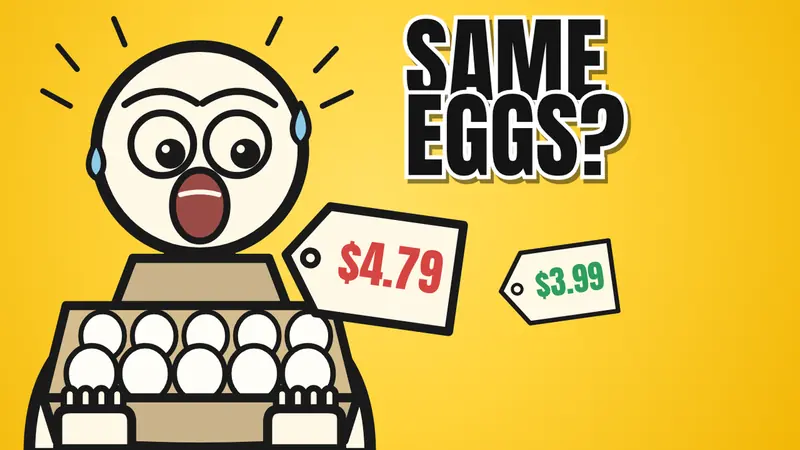
Imagine two people open the same shopping app, in the same town, in the same minute, and put the same carton of eggs in their cart. One sees one price. The other sees a higher one. No sale has started, nothing has sold out, and neither of them did anything wrong.
Welcome to personalized pricing, the quiet idea that a price can be less a fact about the product and more a guess about you. The headlines make it sound like a robot is scanning your face at the checkout. The evidence is calmer than that in one way and more unsettling in another, and the gap between the two is where most people lose money.
This article explains what personalized pricing actually is, what the best studies and regulators have found, and a simple protocol to stop overpaying without turning your life into a coupon hunt.
Short answer: Personalized pricing is when a seller shows different prices to different people for the same product at the same time, based on data about who you are (your location, device, browsing history, or how loyal you've been). It is one of several "personal price" tricks. Large studies suggest openly charging different prices for an identical item is still fairly rare and usually small, while tilting what you see, when, and in what order is extremely common. You can protect yourself without becoming obsessive.
What is personalized pricing?
Personalized pricing is when the price you see is calculated partly from data about you, with the aim of charging you close to the most you would personally pay. Economists call the pure version first-degree price discrimination, or individualized pricing.
That last part is the whole game. A seller's oldest dream is to charge each customer their personal maximum: more from the eager buyer, less from the hesitant one, capturing money that a single flat price leaves on the table. The OECD, in its background note on the topic, describes personalised pricing as "a form of price discrimination in which" sellers charge "different prices to consumers according to their willingness to pay," and notes that in the extreme a firm could price at each customer's "exact willingness to pay, enabling the firm to capture the entire consumer surplus."
For most of history that was impossible at any scale. You cannot read a million faces. But you can read a million data trails, and that is what changed.
It helps to be precise, because "the price changed" can mean five very different things, and only one of them is truly about who you are. People panic about the wrong one and ignore the common ones.
Five ways a price can be "personal": a taxonomy
Most "the internet is charging me more" stories are really one of these five, and most of them are not the second row. Here is the taxonomy worth memorizing.
| Type | What varies | What it is based on | How personal is it? |
|---|---|---|---|
| Dynamic pricing | The price, over time | Demand, time of day, stock, competitor prices | Not personal. Everyone sees the same price at the same moment. |
| Personalized pricing | The price, between people | Data about you specifically | Fully personal. The thing people fear most. |
| Price steering (personalized ranking) | The order of results | Your profile and past behavior | Personal, but prices are the same. Pricier options just float to the top. |
| Targeted discounts and coupons | Who gets a deal | Segments (new customer, lapsed customer, cart-abandoner) | Semi-personal. A discount off a shared list price. |
| Location and channel pricing | The price, by place or device | Your region, your app vs the website | Semi-personal. Based on where or how you shop, not who you are. |
Dynamic pricing vs personalized pricing vs price steering
These three get blended constantly, so pin the differences down.
Dynamic pricing moves the price for everybody based on conditions. Think ride-hailing surge, airline seats that creep up as a flight fills, or hotel rooms that cost more on a festival weekend. It can feel unfair, but it is not about you. Two neighbors checking at the same second see the same surge.
Personalized pricing moves the price between people at the same moment based on who each person appears to be. One person sees one number, the next sees another, same second, same product. That is the genuinely personal version, and the one regulators watch most closely.
The sneaky middle child is price steering, or personalized ranking. The prices are identical for everyone, but the shop quietly reorders what you see so the expensive option sits at the top and the cheap one is three screens down. Nobody charged you more. They made the cheaper choice harder to find and bet you would not scroll.
What does the evidence actually show?
The scary version, a system scanning you to price your groceries, is mostly not what careful research finds. Sellers usually do not charge you more for the identical thing. They steer you toward a more expensive thing, and they build the capability to do more.
The most systematic look is a consumer market study commissioned by the European Commission, which sent testers shopping across hundreds of websites in eight member states to look for exactly this. Two findings are worth holding onto. First, openly charging different people different prices for an identical product was rare: the mystery shopping found price differences in only 6% of situations with identical products, and where they appeared the median difference was less than 1.6%. Second, personalized ranking was everywhere: over three fifths (61%) of the e-commerce sites visited personalised the order of results, rising to 92% of airline-ticket sites and 76% of hotel sites. In plain terms, sellers mostly do not charge you more for the same thing. They change what you see first.
An earlier academic study from researchers at Northeastern University found the same flavor. Testing 16 popular e-commerce sites with real and synthetic accounts, they found evidence of personalization on nine of them: measurable steering and some price differences on travel and retail sites, often tied to whether you were logged in or on a mobile device, and usually modest. On one home-improvement site, for example, people on an Android phone were shown a different set of products in a different order, with price gaps that were real but small.
So why the alarm? Because the capability has grown fast, and capability tends to get used. A staff study by the US Federal Trade Commission looked at the intermediaries who sell pricing tools to retailers, what it called "surveillance pricing." It reported that these tools can draw on a person's precise location, their browser history, their mouse movements on a page, and the products they leave sitting in an online cart, and that the intermediaries examined worked with at least 250 business clients selling everything from groceries to apparel. The staff summaries name firms including Mastercard, Accenture, PROS, Bloomreach, Revionics, and McKinsey & Co. The FTC was describing what the tools can do, not proving that a specific store charged you a specific penny more. But you do not build an engine like that to leave it idling.
The grocery-app case: the plumbing, switched on
The sharpest recent example comes from an investigation by the Groundwork Collaborative and Consumer Reports (with More Perfect Union), which analyzed live shopping data from more than 400 Instacart shoppers across four US cities. They reported that nearly three-quarters of the grocery items tested showed different prices to different shoppers at the same store at the same time, that some items carried up to five different price points at once, and that the highest price ran up to 23% above the lowest, with an average gap around 13%. Across a basket, totals varied by about 7%, which the report estimated could add up to roughly $1,200 a year for a household of four. The variation was attributed to AI pricing software called Eversight.
Here is the honest caveat, and it matters. The company said these were short-term, randomized A/B experiments that "were never based on supply or demand, personal data, demographics, or individual shopping behavior," and said it would stop retailers running item price tests on the platform, promising that two families shopping the same items at the same store at the same time would "see the same prices." Take that at face value: even if this case was randomized testing rather than person-targeting, it shows the plumbing exists and can be switched on across a huge platform. The same carton of eggs really did appear at several prices at once.
Location was the earliest tell
Long before any of this, a Wall Street Journal investigation found that an office-supply retailer's website showed different prices to different people after estimating their location. The same desktop stapler might appear at one price for one shopper and a lower price for another a few miles away. A big factor was distance to a rival brick-and-mortar store: when a competitor was within roughly 20 miles, the site tended to show a lower price, and areas that saw the discounts tended to have higher average incomes than areas that did not. Competition nearby meant a better deal; no competitor around, and you often paid more.
A short history: the fixed price tag is a recent invention
The part that reframes everything: the printed price tag, the number that is the same for everyone, is only about 150 years old. For most of commerce, haggling was normal. A shopkeeper looked at your coat and your accent and named a price, and your neighbor might pay half.
As NPR's Planet Money recounts in its short on the invention of the price tag, large department stores in the 1870s helped make the one-price tag standard. Part of the reason was principle: some Quaker merchants refused to haggle because quoting two people different prices for the same good felt dishonest, an "honest price" owed equally to everyone. Part of it was boring and practical: you cannot train thousands of clerks to bargain well, but anyone can read a tag.
So the fixed price was a technology for trusting strangers, not a law of nature. And technologies can be rolled back. Personalized pricing is, in a real sense, the algorithmic return of the haggle, except now one side has all your data and the other side is you, tired, at 11pm.
The Four Tells: what makes an algorithm think you'll pay more
You cannot see the pricing engine, but you can know what it reads. Here is a model worth remembering: the Four Tells. These are the signals most associated with "this person will pay more," drawn from the regulator and academic work above. Give off fewer tells, and you are harder to price.
- Location. Where you are, and what is near you. The Wall Street Journal investigation above found a retailer varying prices by area, with distance to a competing store a major factor. Competition nearby tended to mean a lower price; no competitor around, you often paid more.
- Device and behavior. Whether you are on a phone or a laptop, which operating system, how you scroll, how long you hover. The Northeastern study found device and login status driving differences, and the tools the FTC described can read exactly these micro-signals. A premium phone can read as a premium wallet.
- Urgency. How rushed you look. Arriving straight from a push notification or an ad, shopping late at night, racing a countdown timer. Hesitation and haste are both data, and both can be read as "will not shop around."
- Loyalty. Whether you ever leave. This is the cruelest tell because it punishes doing nothing. Auto-renewing customers, people who never switch provider, those who always buy from the same logged-in account: they are the easiest to charge more, because the seller has learned you will not walk. This is the engine behind the loyalty penalty, which deserves its own read, and you can see the wider evidence on our loyalty penalty research page.
Notice that three of the four are things you do, not things you are. That is good news, because behavior is changeable. Your habits have quietly become your haggling position, and you can change your habits.
Common myths and mistakes
Myth: "A big store admitted it changes prices based on who I am." Be careful here. Most well-documented cases are dynamic pricing (time and demand), steering (order of results), location-based pricing, or randomized testing, not proven person-by-person pricing of an identical item. Do not repeat an accusation about a named company unless there is a real source. The honest claim is that the tools exist and are widely sold, and that steering is common.
Myth: "Private browsing hides me, so I will get the cheap price." Incognito mode clears cookies, but it does not hide your location (your internet connection still reveals your area) or your device type. Treat a logged-out check as a useful comparison, not a magic cloak.
Myth: "Clearing cookies always gets a better deal." Sometimes a fresh, anonymous visitor is quoted more, not less, because the system cannot tell you are a bargain-hunter. The fix is not a ritual, it is comparison. Check more than one way and buy the lower number.
Mistake: trusting the sale badge. "40% off" is meaningless without knowing 40% off what. In the EU, an advertised price reduction must be measured against the lowest price the trader charged in the previous 30 days, precisely because inflated "was" prices are so common. Trust price history, not the badge.
Mistake: thinking this is only about a few cents on eggs. The small stuff is small. The big money is in the things you renew on autopilot: insurance, broadband, phone, energy. That is where paying attention pays rent.
What to do: the Fair Price Protocol
Here is the practical part: six moves that quietly lower every one of the Four Tells. None of this requires becoming the kind of person who keeps a spreadsheet for shampoo. This is the short version of our Fair Price Protocol.
- Set your number first. Before you open the app or the site, decide the most you will pay ("headphones: 120 max," as an example). Deciding in advance kills the urgency tell and stops you being anchored by whatever number they show first. And never buy straight from a push notification. That is urgency, delivered to your pocket.
- Do the second-screen check. For anything meaningful, look at the same item on a second device, logged out, or on a friend's phone. If the prices differ, screenshot it, then either ask the seller or simply buy where it is cheaper.
- Trust price history, not the sale badge. Use a price-history view before you believe a discount. Ask "percent off what, measured when?" A genuine drop survives that question. A fake one does not.
- Hold a yearly Switching Day. Once a year, about thirty minutes, put it in your calendar. List the things you auto-renew: car and home insurance, phone, internet, energy, your savings rate. Get one new-customer quote for each, then call your current provider and say: "I have this quote. Match it, or I switch." This single move attacks the loyalty tell harder than anything else. Grab our free checklist if you want the script.
- Give your AI shopping assistant rules. If you ever let an app or agent buy on your behalf, set hard rules first. Research on AI shopping agents (Zhu and colleagues) found that weaker models breached their budget, accepting deals above it in over 10% of cases, and tended to overpay once they revealed their budget to the seller. In a large simulated marketplace from Microsoft Research, every model tested showed a strong "first-offer" bias, accepting the first proposal most of the time and in some cases 100% of the time. So tell your agent: (a) a hard budget it can never exceed; (b) never reveal that budget to a seller; (c) collect at least three offers and never just take the first; (d) ignore "award-winning" and countdown claims unless verified; (e) ask you before any payment. Each rule blocks a known failure.
- Look for the label, and report it. In the EU, consumer rules now require sellers to tell you when a price was personalized by automated decision-making. If a price looks personal and there is no label where the law requires one, that is worth reporting to your consumer protection agency.
Move four, Switching Day, is the one that pays for itself, and the one people most often mean to do and never actually do. If you want it done for you, we built a kit for exactly that.
If the deeper question nagging at you is why smart, capable people still overpay year after year, that is less about math and more about psychology, and it is the subject of why smart people stay broke.
Key terms
- Personalized pricing: Charging different people different prices for the same product at the same moment, based on data about each shopper.
- Dynamic pricing: Changing a price for everyone over time based on conditions like demand, stock, or time of day.
- Price steering (personalized ranking): Reordering search results so pricier options appear first, while the prices themselves stay the same for everyone.
- First-degree price discrimination: The economist's name for charging each customer their individual maximum willingness to pay.
- Willingness to pay: The most a particular person would hand over for something before walking away.
- Consumer surplus: The gap between what you would have paid and what you actually paid; personalized pricing aims to shrink it toward zero.
- Surveillance pricing: The FTC's term for setting individual prices using detailed personal data supplied by third-party pricing intermediaries.
- Loyalty penalty: The pattern where long-standing, auto-renewing customers are charged more than new ones for the same service.
- Automated decision-making: Using an algorithm rather than a person to set or adjust a price, which in the EU can trigger a disclosure duty.
Frequently asked questions
Does a big online store change prices based on who I am?
Large online stores are well known for dynamic pricing (prices that move for everyone with demand, stock, and competitors) and for personalized ranking (reordering what you see). Clear, documented cases of a major retailer charging different people different prices for an identical item at the same moment are harder to find, and you should not assume it without a source. The safe conclusion: the capability is widespread, so compare rather than trust.
Is personalized pricing legal?
In most places there is no outright ban on tailoring a price, but it must not discriminate on protected grounds such as race or sex, and transparency rules are tightening. In the EU, sellers must disclose when a price was personalized by automated decision-making, a duty that explicitly does not cover ordinary dynamic pricing. Rules differ by country, so this is general information, not legal advice.
How can I tell if I am being charged a personalized price?
You usually cannot tell from a single screen, which is the whole problem. The practical test is comparison: check the same item on a second device while logged out, or on a friend's phone, and look at the price history. A gap between devices, or a "discount" that does not match the recent low, is your signal. Where the law requires a personalization label, look for it.
What is the difference between dynamic pricing and personalized pricing?
Dynamic pricing changes the price for everyone based on conditions like demand or time, so two people checking at the same second see the same number. Personalized pricing changes the price between people at the same moment based on data about each person. Dynamic is about when you shop; personalized is about who the system thinks you are.
Does incognito mode get me a cheaper price?
Sometimes, but not reliably, and not for the reason people think. Private browsing clears cookies and hides your logged-in history, but it does not hide your location or device type, which are strong pricing signals. Use it as one way to compare, alongside a different device, rather than as a guaranteed discount.
Why do prices change for different people?
Because sellers would love to charge each customer their personal maximum, and data now makes that far easier to attempt than it used to be. The signals they lean on are your location, your device and behavior, how urgent you seem, and how loyal you have been. Reduce those signals, and you become harder, and less profitable, to price.
Is personalized pricing the same as surveillance pricing?
They overlap. Surveillance pricing is the FTC's term for the specific practice of setting individual prices using detailed personal data gathered through third-party intermediaries. Personalized pricing is the broader idea; surveillance pricing names the data-heavy, algorithmic machinery that can power it.
Sources & methodology
How we researched this: we read the primary sources listed below, including the regulator reports, the peer-reviewed study, and the investigations, and confirmed each number in the original document. Figures are quoted as reported by the source for the market and period it studied, not generalized beyond it; for example, the European Commission figures describe sites tested across eight EU member states, and the grocery-app figures describe one platform as reported by the investigators, whose "randomized testing" characterization the company disputes in part. We do not run our own pricing surveys. Spot an error? Email us and we will fix it.
- European Commission, Consumer market study on online market segmentation through personalised pricing/offers in the European Union. commission.europa.eu
- OECD, Personalised Pricing in the Digital Era (OECD Competition Committee background note). oecd.org
- US Federal Trade Commission, FTC Surveillance Pricing Study Indicates Wide Range of Personal Data Used to Set Individualized Consumer Prices (press release). ftc.gov
- US Federal Trade Commission staff, Surveillance Pricing 6(b) Study: Research Summaries. ftc.gov (PDF)
- Hannak, Soeller, Lazer, Mislove and Wilson, Measuring Price Discrimination and Steering on E-commerce Web Sites, Proceedings of the ACM Internet Measurement Conference. doi.org/10.1145/2663716.2663744
- Groundwork Collaborative, Consumer Reports and More Perfect Union, Same Cart, Different Price: Instacart's Price Experiments Cost Families at Checkout. groundworkcollaborative.org
- Consumer Reports, New report exposes hidden price games on a grocery app. consumerreports.org
- Valentino-DeVries, Singer-Vine and Soltani, Websites Vary Prices, Deals Based on Users' Information, The Wall Street Journal. wsj.com
- European Union, the "Omnibus" Directive amending EU consumer protection rules, including disclosure of personalized prices and the prior-price rule for reductions. eur-lex.europa.eu
- Zhu, Sun, Nian, South, Pentland and Pei, The Automated but Risky Game: Modeling and Benchmarking Agent-to-Agent Negotiations and Transactions in Consumer Markets. arXiv
- Microsoft Research, Magentic Marketplace: an open-source simulation environment for studying agentic markets. microsoft.com
- NPR Planet Money, The Invention of the Price Tag. npr.org
Education only, not financial, investment, tax or legal advice. Found an error? Email coinandcortex@gmail.com and we'll fix it.
Keep reading
-
The Fair Price Protocol: a six-step habit to stop overpaying
A plain-English look at personalised and dynamic pricing, the loyalty penalty, and a simple six-step habit to get a fair price.
-
The Loyalty Penalty: Why Loyal Customers Pay More (and How to Stop It)
The loyalty penalty means long-standing customers often pay more than new ones. Learn why it happens and how to stop overpaying on your bills.
-
Start here
Lifestyle Creep: Why Earning More Doesn't Make You Richer (and How to Stop It)
Lifestyle creep quietly eats every raise you earn. Learn why it happens and a simple rule to keep more of your money without feeling deprived.
-
Start here
Why Do We Work 40 Hours a Week? The Surprising History (and What It Means for Your Money)
Why do we work 40 hours a week? The real history of the 40-hour week, why Keynes's 15-hour prediction flopped, and how to price your time in life-hours.