Do Prices Change Based on Your Browsing History? What the Evidence Actually Shows
Picture Sam hunting for a flight. Sam checks the fare once after dinner, again an hour later, then a third time before bed, and watches it climb each time. The obvious culprit is the laptop: the airline must be spying on all that searching and punishing the interest.
It is the most natural story in the world, and it is mostly wrong. The truth is more interesting, and more useful, because once you know what actually moves a price, you stop chasing ghosts and start catching the real overcharges.
This article gives you a calibrated answer across all the evidence, not just the airline version everyone repeats, plus a two-minute test you can run yourself before any purchase.
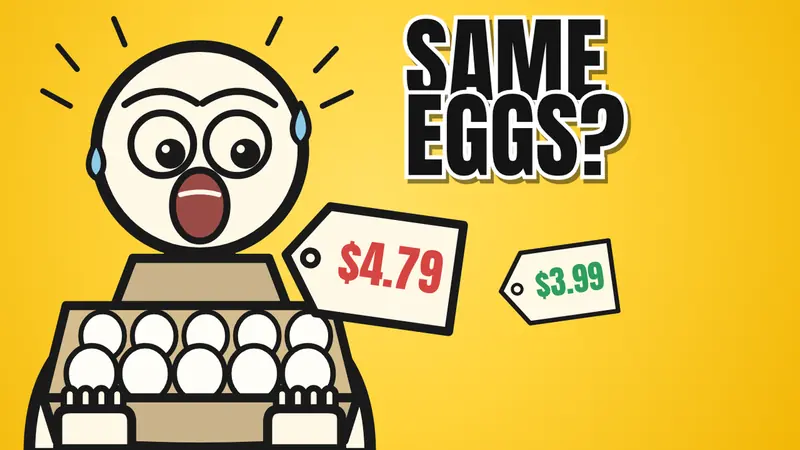
Short answer: Mostly no, with real exceptions. On airline websites, careful studies have found little or no evidence that your cookies or search history change the price of the identical flight; the number usually moves because of demand, dwindling cheap seats, and time to departure, not because of you. At some other online sellers, your browsing profile can shift prices by small amounts, and almost everywhere, what you are shown first is quietly personalized. Clearing cookies or going incognito is a fair comparison trick, not a reliable discount.
Do prices really change based on your browsing history?
Usually not for the exact same item, and this is the single most important thing to separate: the price of a product is a different question from the order you are shown products in. People panic about the first and ignore the second.
Think of it as two dials. One dial sets the number on the identical thing, same flight, same seat, same baggage. The other dial decides which options float to the top of your screen and which get buried. The research is fairly reassuring about the first dial and quite blunt about the second.
So the honest verdict comes in three parts:
- The price of an identical item on airline sites: mostly no. Controlled tests keep failing to find cookie-based pricing, even while prices swing wildly for everyone.
- The price at some other sellers: sometimes, and usually by small amounts. Certain travel agencies, retailers, and third-party sellers do treat browsing profiles differently.
- What you are shown first: very often. Reordering results by your profile, called steering, is extremely common in travel.
If you want the big-picture tour of how a price can become a guess about you rather than a fact about the product, start with our pillar guide to how personalized pricing works. This article drills into the specific question people actually type into a search bar at 11pm: is my browsing history making this flight more expensive?
What the research found about flight prices
For the identical flight, the weight of the evidence says your searches are not the reason the price moved. Several independent teams went looking for exactly this effect on airline sites and mostly came up empty.
One privacy study, Vissers and colleagues in their aptly titled Crying Wolf?, ran a three-week experiment spanning 25 airlines, tens of user profiles, and two locations. Their conclusion was flat: it "did not reveal the use of any systematic price discrimination," even as prices for the same flight swung around dramatically for everyone.
A separate study in the Journal of Theoretical and Applied Electronic Commerce Research (Azzolina and colleagues) checked airline sites against control prices pulled straight from a global distribution system, the back-end platform travel agents use. They asked whether airlines priced by the personal data they collect, and reported that "no evidence is found in this study to support" that idea.
Then there is the plain consumer test. Consumer Reports ran 372 simultaneous flight searches across nine ticketing sites, each search run twice at the same instant: once in a browser loaded with a long search history, once in a scrubbed one. About 88% of the time the price was exactly the same regardless of cookies. Of the 42 pairs that differed, the scrubbed browser got the higher fare more often (25 times) than the lower one (17 times). In other words, clearing your cookies was as likely to hurt as to help.
If airlines are not reading your cookies, why does the number dance? Because airline pricing is genuinely complicated underneath. A detailed study of one large US airline's real pricing system (Hortaçsu and colleagues) describes how the fares actually get set: analysts supply a ladder of fare levels and a demand forecast for each flight, and a pricing heuristic then decides how many of the remaining seats to sell at each level, re-run as departure approaches. The inputs are about the flight, the calendar and the forecast. Who happens to be searching is not part of that machinery.
Why does the price go up when I search again?
Because the thing you are watching usually changed for everyone, not just for you. A flight is not one price; it is a stack of fare buckets, cheapest first. When the cheap bucket sells out, the next person who looks, including you a few minutes later, sees the next price up.
Here are the real reasons a fare seems to jump, roughly in order of how often they are to blame:
- The cheap seats sold out. Airlines release a limited number of seats at each fare level. When the bargain bucket empties, the price steps up for the whole market, not for you personally.
- Time to departure and demand. As a date fills or draws near, fares tend to rise. Search on a popular route at a busy moment and the number reflects that pressure.
- Stale numbers on aggregators. Comparison sites sometimes show a cached fare that is a little out of date. Click through and the live price is different, which feels like a punishment and is really just a refresh.
- Logged-in or app-only prices. Some sellers quote members or app users a different number, and in the studies below the documented member prices were discounts, not surcharges.
- Point of sale and currency. The country version of a site and the currency can change what you see, which we get into below.
- A/B tests and cart-abandonment offers. Sellers run pricing experiments on random visitors, and sometimes send a discount after you leave something in a cart. Neither is really about your browsing history.
Back to Sam, who watched the fare rise three times and blamed the laptop. What almost certainly happened is that the cheapest bucket was nearly gone while other travelers bought the same seats. The price rose because the plane was filling, not because the browser snitched.
Why the cookie myth refuses to die
The myth survives because of how attention works, not because the evidence supports it. You remember vividly the evening the price climbed after you searched. You forget the dozens of times it stayed flat or fell, because nothing happened and nothing is not memorable.
That is textbook confirmation bias, the well-documented habit of noticing the evidence that fits a belief we already hold (Nickerson gives the classic survey). Add scarcity anxiety, a countdown timer, a "3 seats left" badge, and a tired brain joins two dots that were never connected: I searched, then it rose, so my searching caused it.
Does incognito or clearing cookies make flights cheaper?
Sometimes, but not reliably, and not for the reason the internet promises. Private browsing and cleared cookies are a useful way to compare, not a magic switch that unlocks a secret cheap price.
Recall the Consumer Reports numbers: across 372 paired searches, the scrubbed browser landed the higher fare slightly more often than the lower one. If clearing cookies were a reliable discount, that would not happen.
Two things incognito does not hide are worth knowing. It does not hide your rough location, because your internet connection still reveals your area, and it does not hide your device type. So treat a private window as one honest second opinion run alongside a normal window, not a cloak.
Do flight prices change based on your IP address or location?
Here the answer flips to a clearer yes, but not for the reason you might fear. Location can genuinely change prices, mostly through which country version of a site you land on, which currency you are quoted in, and the seller's point of sale, not through a shady profile of you personally.
The same flight or product can carry a different price on a seller's site for one country than on its site for another, and currency and local taxes shift the final number. Testers at Austria's Chamber of Labour, as summarised by the UK competition regulator, found exactly that kind of gap between the same online shops accessed from Austria and from Germany. Your IP address mainly gives away your country: the same UK regulator notes that IP geolocation is quite accurate at country level but much more hit-or-miss at the level of a region or city. That is why people sometimes find a cheaper fare on a different country's version of a booking site, and why "country hopping" with a VPN gets passed around as a hack. It can occasionally surface a different fare, but the caveats are heavy:
- It may break a seller's terms of use.
- Your payment card's billing country can block or flag a purchase made on a foreign storefront.
- Currency conversion and foreign-transaction fees can eat the saving.
- The consumer protections that apply to a purchase can depend on where you bought it.
There are also rules in the background, at least in some places. In the EU, published air fares available to the general public may not vary based on a customer's nationality or place of residence, under the bloc's air services regulation (Article 23(2)). Separately, the EU's Geo-blocking Regulation bans unjustified discrimination by nationality or residence for a range of online sales, though it carves transport services out of its scope, so flights sit under the air-fares rule rather than the geo-blocking one. Rules differ by country and this is general information, not legal advice, but the direction of travel is toward less location-based gaming, not more.
When your browsing history does cost you
At some sellers, and in small amounts, it genuinely can. The careful "no" above is specific to the price of the identical item on airline sites. Widen the lens to travel agencies, aggregators, and online retailers, and real, if modest, personalization shows up.
The sharpest look is an audit of kayak.com by Karan, Balepur and Sundaram, bluntly titled Your Browsing History May Cost You. They built nine distinct profiles based on behavior, not demographics, and shopped the flight and hotel markets. Their finding is nuanced and honest: many sellers, "but not all," showed behavior-driven differences, yet a control profile carrying no browsing history was on average offered the best flight prices, the opposite of the scary story.
And the amounts were small. The price gap between any two profiles you would expect just by chance was about $0.44 for flights and $0.09 for hotels. The worst-case expected loss against the best-performing profile reached roughly $6 for flights and $3 for hotels. Real and seller-specific, but hardly a robot reading your soul.
An earlier measurement study (Hannak and colleagues) tested 16 well-known e-commerce and travel sites and found personalization on nine of them, with a useful breakdown:
- Cheaptickets and Orbitz offered reduced hotel prices to logged-in "members."
- Expedia and Hotels.com ran A/B tests that steered some users toward pricier hotels.
- Travelocity offered lower hotel prices to people on iPhones and iPads, and Home Depot showed mobile users a different, pricier pool of products than desktop users.
- Priceline reordered results based on a user's history of clicks and purchases.
Notice how much of that is steering and membership, not a secret surcharge on the same item. That pattern scales up. A large European Commission mystery-shopping study found open price differences for an identical product in only about 6% of situations, with a median gap under 1.6%, while personalized ranking appeared on 61% of sites, rising to 92% of airline-ticket sites and 76% of hotel sites.
The most famous case is pure steering. A Wall Street Journal investigation reported that a travel agency showed Mac users pricier hotel options than Windows users, having noticed Mac users tended to book costlier rooms. Crucially, it was not charging different people different prices for the same room; it was changing which rooms surfaced first. Same prices, different shelf.
What regulators found when they went looking
Regulators have run their own checks and landed in the same place. The UK Competition and Markets Authority ran a small mystery-shopping trial of ten big retail and travel websites from its internet lab, comparing anonymous profiles at exactly the same time. It "did not observe any direct examples of personalised pricing apart from a small number of advertised discounts for members," but it did see different consumers being shown different search results. The regulator was candid about the limit: it could not test pricing based on someone's long-term purchase history.
That limit matters, because the capability is real. A staff study by the US Federal Trade Commission into "surveillance pricing" found that the intermediaries selling pricing tools to retailers can draw on data such as a person's location, browsing behavior, mouse movements and items left in an online cart, and that these intermediaries worked with at least 250 business clients. The FTC staff were describing what the tools can do, not proving that a specific shop charged you more for a specific item. The fair reading of all this: no evidence that searching a flight twice raises its price, plenty of evidence that the plumbing for personal pricing exists, so checking beats trusting.
The Two-Window Test
The good news is you do not have to trust anyone's conclusion, including ours. You can settle it for your own purchase in about two minutes. Call it the Two-Window Test.
The trick is to control for the one thing that fools everyone: time. Prices move for everyone minute to minute, so checking at 8pm and again at 9pm proves nothing. You compare two windows at the same instant.
- Fix the exact item. Same flight, same dates, same fare class, same baggage, or the same product and variant. A tiny difference in what you are comparing invalidates the whole test.
- Open two windows at once. Window A: your normal browser, logged in. Window B: a private or incognito window, logged out. Load the identical item in both at the same moment.
- Compare the final checkout price, fees included. Not the headline fare, the number you would actually pay, because fees are where gaps often hide.
- Repeat once. Do it again a few minutes later to confirm the result was not just a timing blip.
Then read your result against this table.
| What you see | Most likely cause | What to do |
|---|---|---|
| Same price in both windows | Dynamic pricing or demand, not you | Buy when the number meets your pre-set limit; recheck another day |
| Logged-in window cheaper | Member or loyalty price | Log in (or join) to buy at the lower price |
| Private, logged-out window cheaper | Possible personalization or an A/B test | Buy in the cheaper window, and rerun the test the next time you shop there |
| Same prices but a different running order | Steering (personalized ranking) | Sort by price and scroll past the promoted options up top |
| Different by country site or currency | Point of sale | Compare country versions, then mind fees and card rules |
Most of the time you will land on the first row, which is oddly freeing: the price is not a verdict on you, it is just the market at that moment.
Common myths and mistakes
Myth: "The airline is jacking up the price because I keep searching." The controlled tests do not support this for the identical flight. The fare rose because cheap seats sold out or the date filled, which happens whether or not you looked.
Myth: "Incognito always gets the cheap flight." Sometimes it is cheaper, sometimes dearer, often identical. In the Consumer Reports test, the scrubbed browser caught the higher fare more often than the lower one. Use it to compare, not as a guaranteed discount.
Myth: "Clearing cookies lowers the price." A fresh anonymous visitor can be quoted more: in the Consumer Reports test, the scrubbed browser got the higher fare in 25 of the 42 mismatches. It is a reset, not a coupon.
Mistake: comparing two different things. People "prove" personalization by checking a flight on different days, or a basic fare against one with bags. That is not a controlled test. Only a same-moment, same-item comparison tells you anything.
Mistake: obsessing over a few dollars on flights while the real money leaks elsewhere. The flight gaps the studies found are small. The big, repeatable overcharges hide in the things you renew without looking, insurance, broadband, phone, energy, which is the territory of the loyalty penalty and the wider evidence we collected on it.
What to do before you buy anything online
Here is the habit, five moves that cover both the small flight question and the bigger overcharges. The video above walks through this routine at the end; this is the written version.
- Decide your number first. Before you open the site, set the most you will pay. This kills the urgency the whole system feeds on, and stops a countdown timer doing your thinking.
- Run the Two-Window Test. For anything meaningful, do the same-moment, same-item check above, then buy in the cheaper window.
- Check more than one country site for travel. Where legitimate, compare another country version and currency, then subtract conversion and card fees before you get excited.
- Trust price history, not the badge. A "deal" means nothing without knowing the recent normal price. A real drop survives that question; a fake "was" price does not.
- Hold one yearly Switching Day. Put thirty minutes in your calendar. List everything that auto-renews, get a fresh new-customer quote for each, and either switch or ask your provider to match it. This single move beats a year of flight-fare paranoia. Our short, no-sign-up Fair Price Protocol gives you the steps and the scripts.
Key terms
- Browsing-history pricing: The claim that a site changes your price based on your past searches, cookies, or device. More feared than found for the identical item.
- Price steering (personalized ranking): Reordering results so pricier options appear first, while the prices themselves stay the same for everyone.
- Fare bucket: A limited batch of seats sold at one fare level. When the cheapest bucket sells out, the next price up becomes the one everyone sees.
- Dynamic pricing: Prices that move for everyone over time with demand, stock, and timing, not based on who you are.
- Point of sale: The country, site version, and currency a purchase runs through, which can legitimately change the price you are shown.
- A/B testing: Showing different prices or layouts to random groups of visitors to see what performs, unrelated to your personal history.
- Price discrimination: Charging different buyers different prices for the same thing based on what each is predicted to pay.
- Confirmation bias: The habit of noticing and remembering evidence that fits what you already believe, which keeps the cookie myth alive.
Frequently asked questions
Do airlines change prices based on your searches?
The controlled evidence says mostly no for the identical flight. Independent experiments across many airlines found no systematic price discrimination tied to cookies or search history, even though fares swing a lot for everyone. When a price rises after you search, the usual cause is cheap seats selling out, the date filling, or time ticking toward departure.
Why did the price go up when I searched again?
Because the fare you were watching almost certainly changed for the whole market, not just for you. Flights are sold in limited cheap-to-expensive buckets, and when the bargain bucket empties, the next person to look sees a higher number. Repeated searching does not flag you; it just means you were watching while the plane filled.
Does incognito mode make flights cheaper?
Occasionally, but it is not reliable. A Consumer Reports test found prices identical about 88% of the time, and when they differed, the cookie-free browser got the higher fare slightly more often than the lower one. Use a private window as a free second opinion alongside a normal one, not as a guaranteed discount.
Does clearing cookies lower prices?
Not dependably. Clearing cookies resets you to an anonymous visitor, and an anonymous visitor is sometimes quoted more, because the seller cannot tell you are hunting for a deal. It is worth doing as part of a comparison, but it is a reset button, not a coupon.
Do flight prices change based on your IP address or location?
Location can genuinely change prices, mainly through which country version of a site you use, the currency, and local taxes, rather than a personal profile. VPN "country hopping" can sometimes surface a different fare but comes with real catches around terms of use, card billing country, fees, and consumer protections. In the EU, published air fares may not vary by a customer's nationality or residence.
What is the single best way to check if I am being personalized?
Run the Two-Window Test: load the exact same item at the same moment in a normal logged-in window and a private logged-out one, then compare the final price including fees. If they match, it is timing or demand. If they differ, buy in the cheaper window and note which direction the gap ran.
Sources & methodology
How we researched this: we read the primary sources below and confirmed each number in the original paper, report, or regulation, quoting figures as reported for the market and period each study covered. The airline findings describe the airlines and sites those researchers tested, not a promise about your specific route; the personalization figures describe the sellers each study audited. We do not run our own pricing surveys. The Two-Window Test is our own framework. Spot an error? Email us and we will fix it.
- Vissers, Nikiforakis, Bielova and Joosen, Crying Wolf? On the Price Discrimination of Online Airline Tickets, Workshop on Hot Topics in Privacy Enhancing Technologies. petsymposium.org (PDF)
- Azzolina, Razza, Bianchi and colleagues, Price Discrimination in the Online Airline Market: An Empirical Study, Journal of Theoretical and Applied Electronic Commerce Research. doi.org/10.3390/jtaer16060126
- Consumer Reports, How to Get the Lowest Airfares. consumerreports.org
- Hortaçsu, Natan, Parsley, Schwieg and Williams, Organizational Structure and Pricing: Evidence from a Large U.S. Airline, National Bureau of Economic Research. nber.org
- Karan, Balepur and Sundaram, Your Browsing History May Cost You: A Framework for Discovering Differential Pricing in Non-Transparent Markets, ACM Conference on Fairness, Accountability, and Transparency. doi.org/10.1145/3593013.3594038
- Hannak, Soeller, Lazer, Mislove and Wilson, Measuring Price Discrimination and Steering on E-commerce Web Sites, Proceedings of the ACM Internet Measurement Conference. doi.org/10.1145/2663716.2663744
- European Commission, Consumer market study on online market segmentation through personalised pricing/offers in the European Union. commission.europa.eu
- Dana Mattioli, On Orbitz, Mac Users Steered to Pricier Hotels, The Wall Street Journal. wsj.com
- European Union, Regulation on common rules for the operation of air services (air fares available without discrimination based on nationality or residence, Article 23(2)). eur-lex.europa.eu
- European Union, Geo-blocking Regulation on addressing unjustified geo-blocking in the internal market (transport services excluded from scope). eur-lex.europa.eu
- UK Competition and Markets Authority, Implications of E-commerce for Competition Policy: Note by the United Kingdom (OECD Competition Committee), including Annex A, "Testing for evidence of personalised pricing". one.oecd.org (PDF)53/en/pdf)
- US Federal Trade Commission staff, Surveillance Pricing 6(b) Study: Research Summaries. ftc.gov (PDF)
- Nickerson, R. S., Confirmation Bias: A Ubiquitous Phenomenon in Many Guises, Review of General Psychology. doi.org/10.1037/1089-2680.2.2.175
Education only, not financial, investment, tax or legal advice. Found an error? Email coinandcortex@gmail.com and we'll fix it.
Keep reading
-
Start here
Personalized Pricing: Why You and Someone Else Pay Different Prices for the Same Thing
Personalized pricing means two shoppers can pay different prices for the same item. See how it works, what the evidence shows, and six ways to pay less.
-
The Fair Price Protocol: a six-step habit to stop overpaying
A plain-English look at personalised and dynamic pricing, the loyalty penalty, and a simple six-step habit to get a fair price.
-
The Loyalty Penalty: Why Loyal Customers Pay More (and How to Stop It)
The loyalty penalty means long-standing customers often pay more than new ones. Learn why it happens and how to stop overpaying on your bills.
-
Start here
Lifestyle Creep: Why Earning More Doesn't Make You Richer (and How to Stop It)
Lifestyle creep quietly eats every raise you earn. Learn why it happens and a simple rule to keep more of your money without feeling deprived.